
Stories of Zadar
Zadar's Cathedral of St Anastasia (Sv. Stošija) is a three-aisled Romanesque building and the largest church in Dalmatia. It was built in two stages, in the 12th and 13th centuries, incorporating older parts from the 9th and 11th centuries, and rises on the site of an Early Christian basilica. The beginnings of the cathedral date back to the 4th or 5th century.
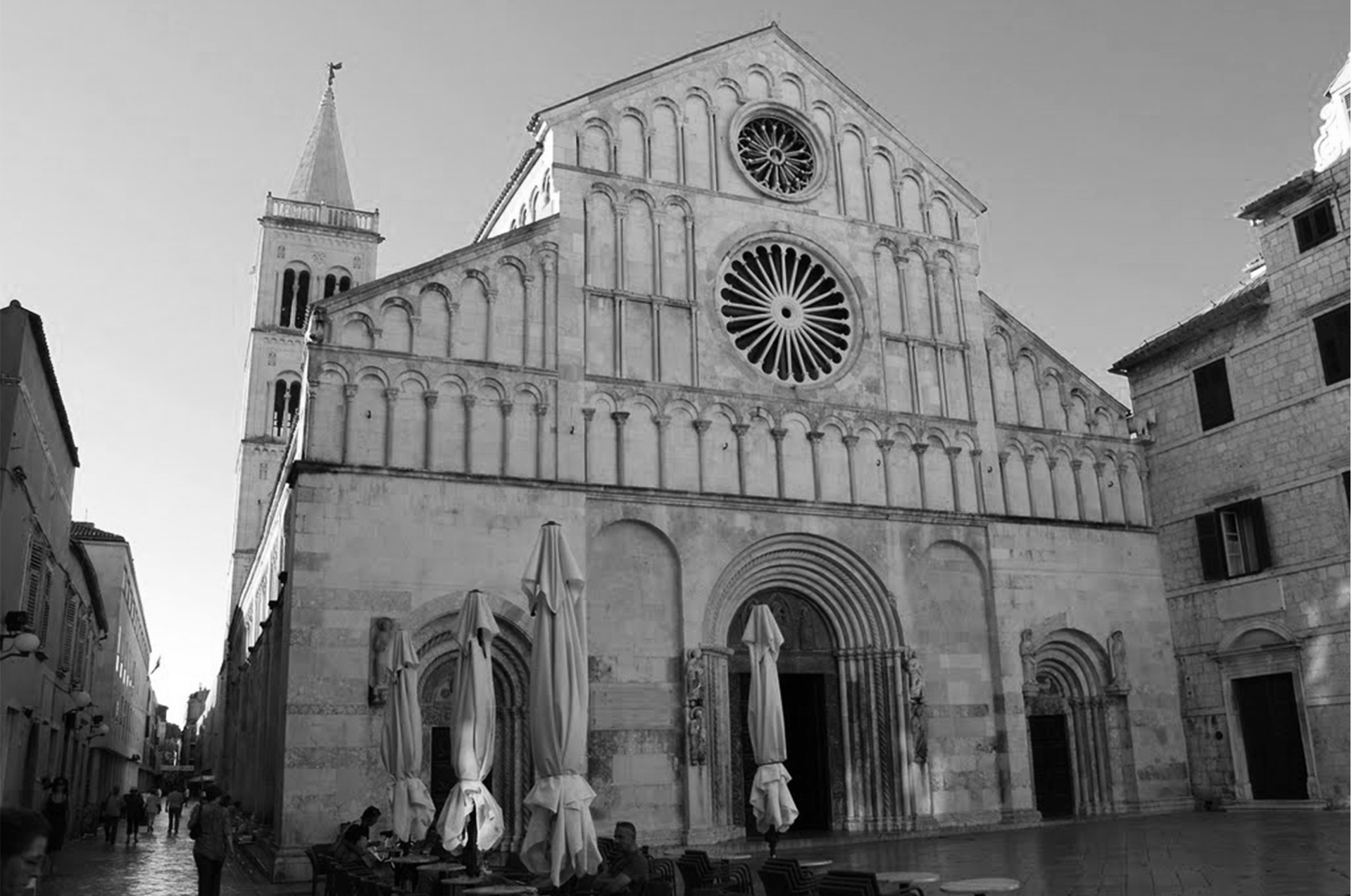
The sarcophagus with the relics of St Anastasia, commissioned by Bishop Donat of Zadar, is kept in the cathedral on the altar of the north apse, in its left aisle. In November 1202, after a siege, Zadar was captured and razed by the Venetians with the help of the knights of the Fourth Crusade, and the cathedral itself was badly damaged. Its restoration lasted throughout the 13th century and, once completed, it was reconsecrated on 27 May 1285 by Archbishop Lovro Periandar. The façade with its late Romanesque portals, whose upper part has small arcades with colonnettes, was completed in 1324. It shows a perfect harmony of horizontal and vertical lines. The main portal has a Gothic relief in the lunette and a dedicatory inscription of Archbishop Ivan from 1324.
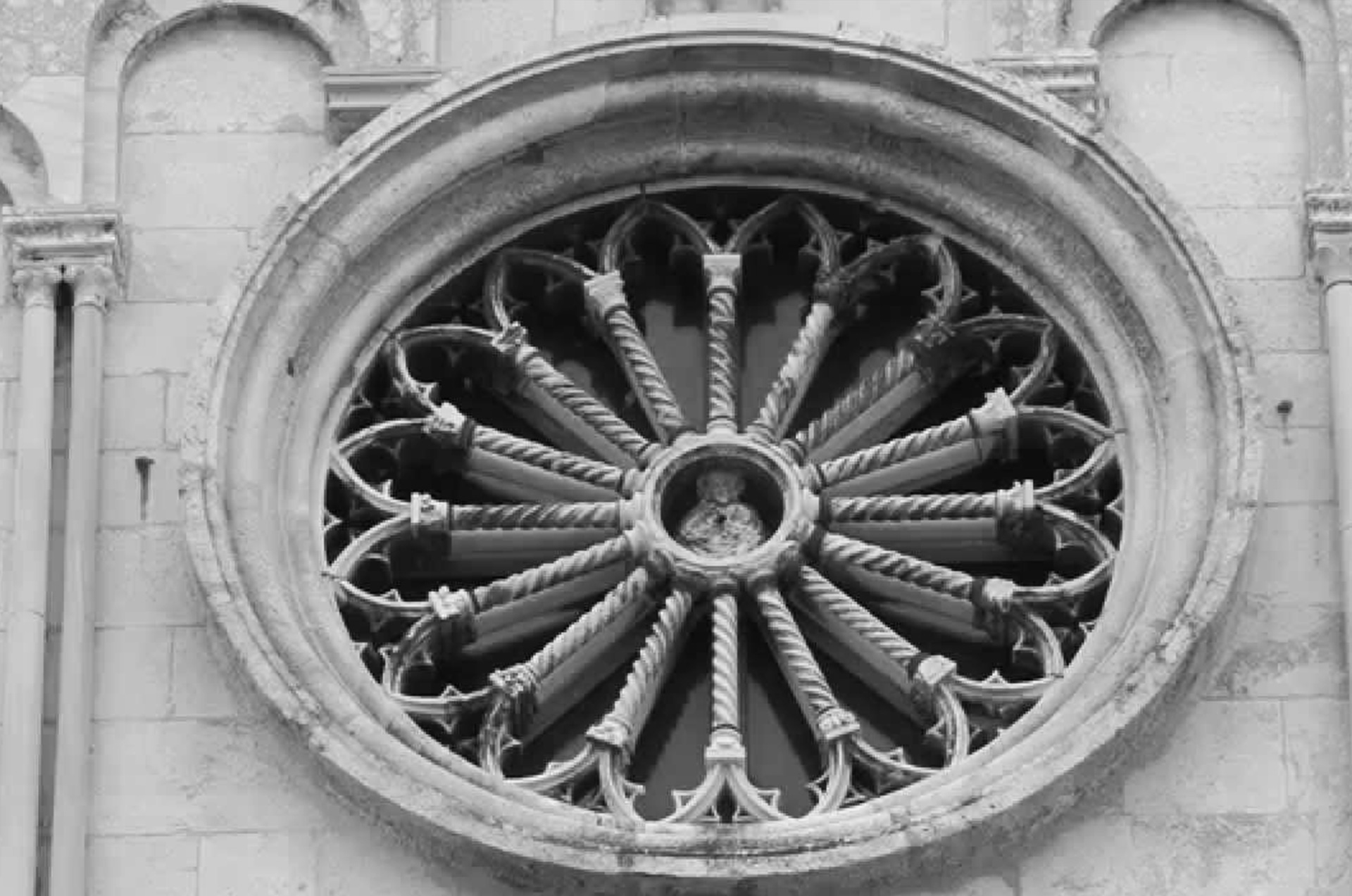
Two popes have paid homage to Zadar's patron saint. Pope Alexander III visited the cathedral and the saint's tomb during his stay in Zadar in 1177, while Pope John Paul II, on his pastoral visit to Zadar on 9 June 2003, bowed in prayer in front of the cathedral's entrance doors.
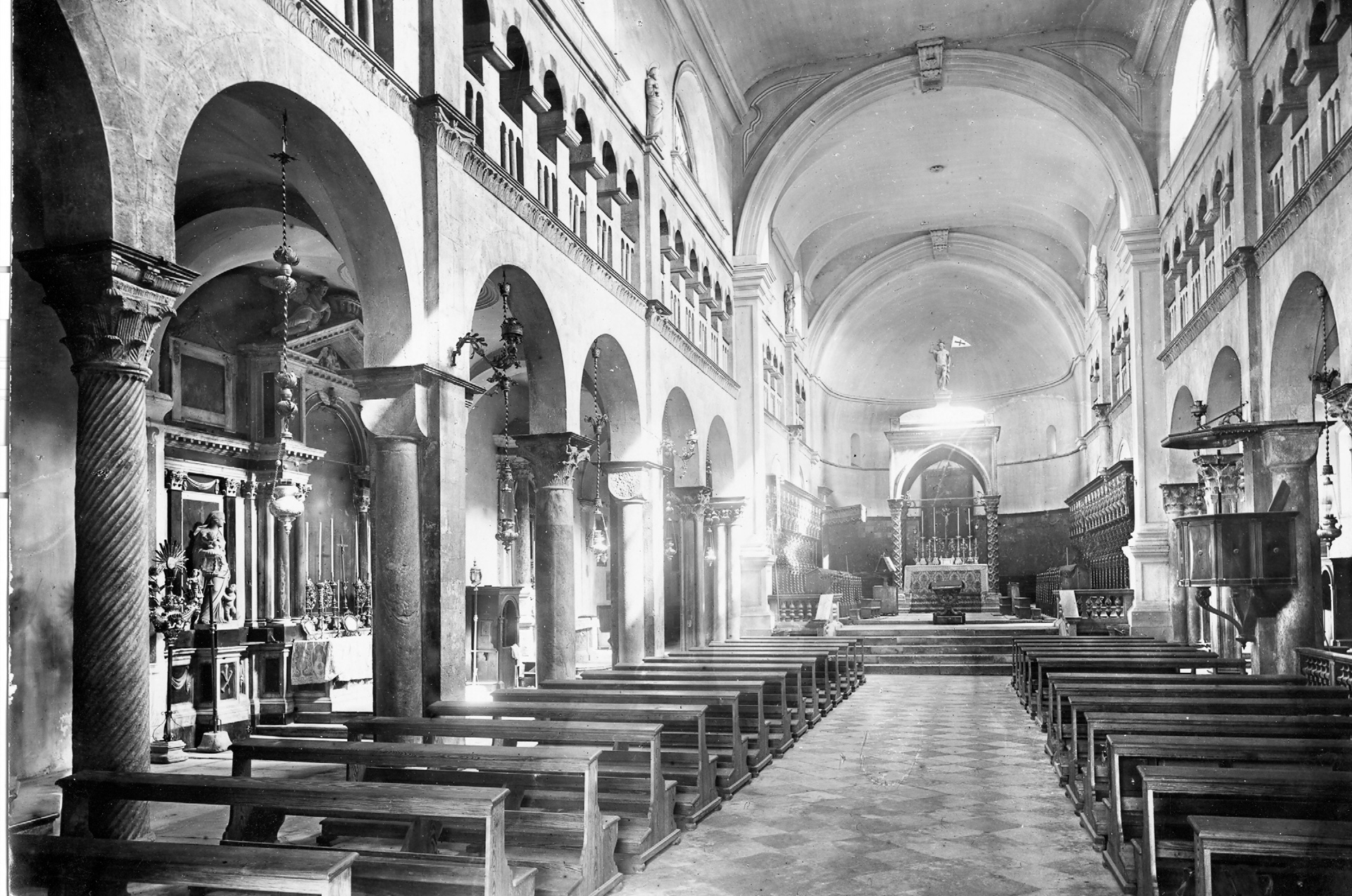
The interior of the cathedral is strikingly monumental. The nave is three times wider than the side aisles and is separated from them by alternating stone columns and piers. The presbytery is raised, with a 12th-century crypt beneath it. In the presbytery are choir stalls in the Flamboyant Gothic style, and above the high altar stands an Early Gothic ciborium from 1322, with the stone throne – the archbishop's cathedra – behind it.
The six-lobed baptistery, originally from the 6th century, stood against the south side of the cathedral; it was razed to the ground in the Allied bombing of 16 December 1943 and rebuilt as a facsimile in 1989.
The sacristy was also known as the Chapel of St Barbara. Its walls and apse belong to the oldest parts of the cathedral, as does the floor mosaic of two stags dating from the first half of the 5th century.
The bell tower was built in the 15th and 19th centuries, mostly in the Neo-Romanesque style. It was completed in 1894 by the English architect and art historian Thomas Graham Jackson. From the top of the tower there is an unforgettable view of Zadar and its surroundings.
After a walk through old Zadar
Join us at Konoba Martinac – fresh fish, seafood and Dalmatian dishes within the stone walls of the old town.
Reserve a table +385 23 250753